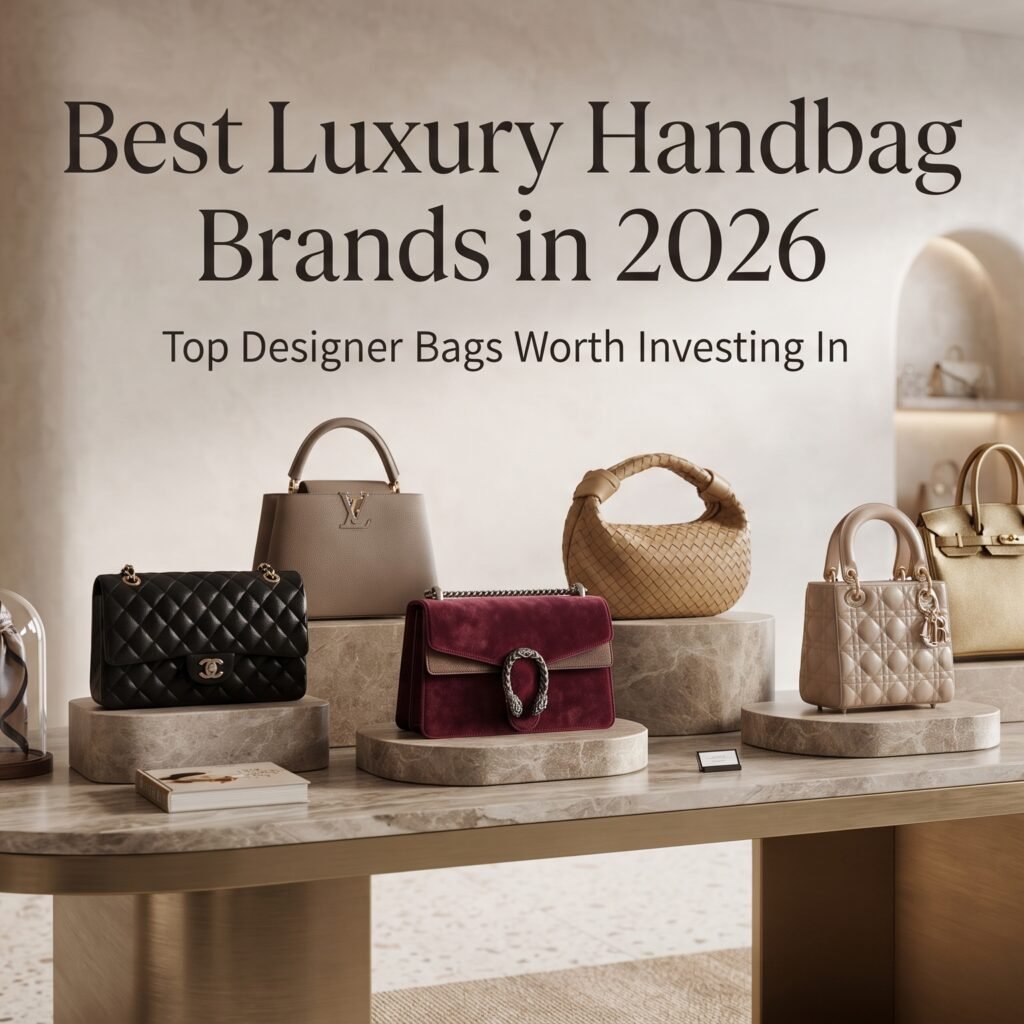
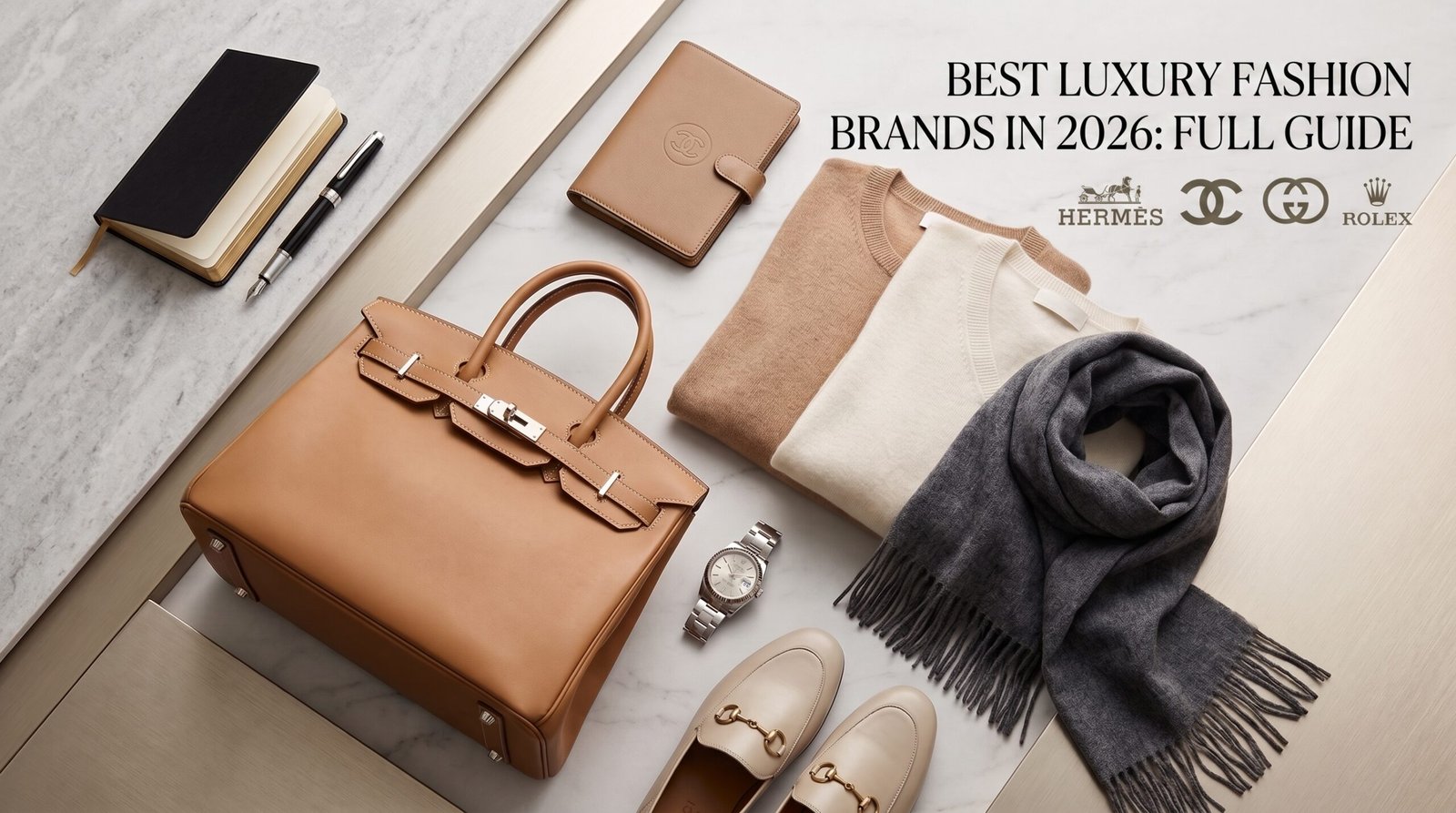
Luxury fashion in 2026 looks different than it did even three years ago. The loud, logo-heavy era of the 2010s has given way to something quieter — and paradoxically, more expensive. Brands are being judged less on how many bags they sell and more on whether their identity survives a change in creative director, whether their craftsmanship holds up under scrutiny, and whether a piece still looks (and resells) well a decade later.
This guide breaks down the brands actually leading that shift in 2026, based on brand valuation reports, resale market data, and industry analysis — not just marketing spend. Whether you’re building a “quiet luxury” wardrobe, hunting for a genuine investment piece, or simply want to know which names are worth the premium, here’s the real picture.
How We Ranked These Luxury Fashion Brands
This guide leans on a mix of publicly tracked brand-value rankings (like Brand Finance’s Luxury & Premium 50 and Interbrand’s Best Global Brands), secondary-market resale data, and documented shifts in creative direction and business performance through 2025 into 2026. Four things separate the brands at the top: an identity that survives a change in designer, craftsmanship that justifies the price, deliberate scarcity, and cultural relevance that doesn’t rely on heavy advertising.
One important note: rankings measure brand value and resale strength, not personal taste. The “best” brand for you depends on your style, your budget, and what you actually want your clothes to say.
Quick Comparison Table
$$
| Brand | Category | Price Range | Known For | Best For |
|---|---|---|---|---|
| Louis Vuitton | Leather goods, ready-to-wear | $$$$ | Monogram canvas, travel heritage | Broad luxury recognition |
| Hermès | Leather goods, accessories | Birkin, Kelly, extreme scarcity | Long-term investment | |
| Chanel | Ready-to-wear, accessories | 2.55 bag, tweed suit | Timeless elegance | |
| Dior | Couture, ready-to-wear | $$$$ | Romantic tailoring, New Look heritage | Classic femininity |
| Prada | Ready-to-wear, accessories | $$$ | Minimalist design, nylon-to-luxury | Intellectual minimalism |
| Bottega Veneta | Leather goods | $$$$ | Intrecciato weave, logo-free design | Stealth wealth |
| Loro Piana | Textiles, outerwear | $$$$ | Cashmere and vicuña | Quiet luxury basics |
| Brunello Cucinelli | Knitwear, tailoring | $$$ | Ethical “quiet luxury” cashmere | Understated craftsmanship |
| The Row | Ready-to-wear | $$$$ | Ad-free, logo-free minimalism | Architectural quiet luxury |
| Ralph Lauren | Ready-to-wear | $$ | Accessible American luxury | Entry-level luxury |
Top Luxury Fashion Brands in 2026
Louis Vuitton
Louis Vuitton remains the world’s most valuable luxury fashion brand by nearly every major methodology, a position it has now held for eight consecutive years. Parent company LVMH continues to anchor its value in the brand’s monogram canvas, its travel-goods heritage, and a retail footprint few competitors can match. On the resale market, staple leather pieces like the Speedy, Neverfull, and Keepall remain reliably liquid, which is part of why the brand keeps its top spot even in a slower luxury-spending year.
Hermès
Hermès has been the fastest climber at the very top of the rankings, narrowing the gap with Louis Vuitton on the strength of tightly controlled supply and relentless demand for icons like the Birkin and Kelly. That scarcity strategy shows up directly in resale numbers — the average Birkin 30 has been reselling for roughly $22,300 on the secondary market. Hermès also posted the highest operating margin in the entire luxury sector, a sign that its “less but better” approach is paying off financially, not just reputationally.
Chanel
Chanel had one of the standout years of the current cycle, with its brand value climbing 45% year-over-year — the fastest growth of any brand in the top tier. Much of that came from the appointment of a new creative director, only the fourth in the house’s 114-year history, whose debut collections blended relaxed silhouettes with Chanel’s existing design codes. The house’s pricing power is notable too: the Medium Classic Flap bag has nearly doubled in price since 2019. Chanel’s core identity — the 2.55 bag, the tweed suit, the little black dress — remains untouched by any of it, which is exactly the kind of durability that keeps a brand at the top.
Dior
Dior enters 2026 under a new, unusually broad creative mandate, with one designer now overseeing womenswear, menswear, and haute couture simultaneously — a first for the house since its founder. That kind of consolidated creative control is rare in an industry where design teams are usually split by category, and it signals Dior’s intent to present one unified aesthetic across every product line rather than several competing visions.
Prada
Prada’s minimalist, intellectual approach has become one of the more consistent influences on global fashion in the past two years, and the house made a significant strategic move by acquiring Versace, expanding its portfolio without diluting Prada’s own identity. Miu Miu, Prada Group’s younger line, has also emerged as one of its fastest-growing segments.
Bottega Veneta
Bottega Veneta was the only growing brand in its parent group’s portfolio last year, even as its widely praised creative director departed for Chanel. Its logo-free intrecciato leather goods have become some of the most sought-after pieces on the resale market — proof that “stealth wealth” design can carry serious secondary-market value on its own. Bottega has also backed that durability claim with a lifetime guarantee on its bags, a rare commitment in an industry more often built around planned obsolescence.
Loro Piana
Founded in 1924, Loro Piana has become the reference point for the entire quiet luxury movement, built almost entirely around sourcing the world’s finest cashmere and vicuña rather than logos or seasonal trend cycles. It’s part of LVMH’s portfolio and remains one of the most-cited names whenever “old money” or understated wealth aesthetics come up.
Brunello Cucinelli
Known informally as the “King of Cashmere,” Brunello Cucinelli built its identity on ethical production and a neutral, restrained palette long before quiet luxury became a mainstream term. Its steady, premium pricing power and consistent craftsmanship have made it one of the brands benefiting most directly from the shift away from logo-driven fashion.
The Row
The Row has become something of a case study in how a brand can grow without traditional marketing at all — it runs no ads, carries no visible logo, and has no meaningful social media presence, relying entirely on word of mouth among a design-literate clientele. Industry analysts increasingly point to The Row as proof that cultural relevance, not media spend, is what actually drives desirability in the current market.
Ralph Lauren
Ralph Lauren occupies a different lane from the ultra-scarce European houses above it — it’s the most accessible entry point into “luxury” branding for many American shoppers, built on classic tailoring and Americana rather than exclusivity. It won’t retain resale value the way a Birkin or a Chanel flap does, but it remains one of the most recognized names in premium (if not ultra-luxury) fashion.
Luxury Fashion Brand Categories
Best for Quiet Luxury / Old Money Style
Loro Piana, Brunello Cucinelli, The Row, and Bottega Veneta define this category — restrained palettes, no visible branding, and fabric quality that does the talking instead of a logo.
Best for Streetwear-Luxury Crossover
Gucci and Balenciaga continue to sit at this intersection, blending trend-forward, culturally loud design with traditional luxury pricing and craftsmanship.
Best for Investment Pieces (Resale Value)
Hermès, Chanel, and Louis Vuitton lead here by a wide margin. Hermès and Chanel bags in particular have shown consistent appreciation, while most other clothing depreciates the moment it leaves the store.
Best Affordable-Luxury Entry Points
Ralph Lauren, Massimo Dutti, and Mango have been increasingly cited as accessible ways to build a quiet-luxury-adjacent wardrobe without the four-figure price tags of the true heritage houses.
Luxury Fashion Buying Guide
How to Spot Quality Craftsmanship
Look at stitching consistency, fabric weight, and lining quality before you look at the logo. A well-made cashmere knit or wool coat should hold its shape after repeated wear — this is exactly the “cost per wear” logic that separates a genuine investment piece from an expensive impulse buy.
How to Authenticate Luxury Items
Buy directly from the brand’s official boutiques or website whenever possible. For resale or secondary-market purchases, use established, reputable platforms with authentication guarantees rather than unverified marketplaces or social media sellers.
Where to Buy Safely
Official boutiques, brand websites, and well-known resale platforms with in-house authentication teams are the safest routes. The global luxury resale market reached roughly €50 billion in 2025, with one in three luxury buyers now participating in resale — a sign that the secondary market has matured into a legitimate, and generally safe, buying channel.
Common Buying Mistakes
- Buying for the logo instead of the construction quality
- Assuming all luxury clothing appreciates — most pieces outside of iconic leather goods depreciate immediately
- Skipping authentication on resale purchases
- Chasing seasonal trend pieces instead of building a base of timeless staples
Interesting Facts & Statistics
- The global luxury resale market reached approximately €50 billion in 2025, with participation notably higher among shoppers under 35.
- France contributes roughly 49% of total value across the world’s top 50 luxury brands — nearly triple Italy’s share, the next-largest contributor.
- Chanel’s Medium Classic Flap bag price has climbed from around $5,800 in 2019 to roughly $11,300 today, illustrating how aggressively top-tier houses have used pricing power over the past several years.
- Search interest in “quiet luxury” grew over 400% between 2022 and 2024, reflecting the broader cultural shift away from logo-driven fashion.
Expert Recommendation
If you’re shopping for a genuine investment piece with long-term resale value, Hermès and Chanel remain the strongest bets, though the entry price is steep. If your goal is quiet luxury on a more moderate budget, Brunello Cucinelli and Loro Piana deliver the craftsmanship and restraint that define the trend without Hermès-level exclusivity. And if you want luxury-adjacent style without the four-figure commitment, brands like Ralph Lauren or Massimo Dutti offer a reasonable entry point while you build toward bigger purchases.
Conclusion
The best luxury fashion brands in 2026 aren’t necessarily the loudest ones — they’re the ones whose identity, craftsmanship, and scarcity strategy have proven durable through leadership changes, shifting trends, and a genuinely more skeptical luxury consumer. Louis Vuitton and Hermès sit at the very top by nearly every measure, but the real story of 2026 is the rise of quiet, craftsmanship-first houses like Loro Piana, Brunello Cucinelli, and The Row — proof that in luxury fashion right now, restraint has become the loudest status symbol of all.
FAQs
What is the most luxurious clothing brand? By brand value, Louis Vuitton and Hermès consistently rank at the very top, though Hermès has shown the strongest growth and highest profit margins in the sector recently.
What luxury brand holds its value best? Hermès, Chanel, and Louis Vuitton lead in resale value retention, particularly for leather goods like the Birkin, Kelly, and Classic Flap.
Is quiet luxury replacing logo-heavy fashion? It’s a significant and well-documented shift, with search interest and resale data both pointing toward restrained, craftsmanship-first brands gaining share — though logo-driven houses like Gucci and Louis Vuitton remain dominant in overall brand value.
What’s the difference between luxury and premium brands? Luxury brands typically emphasize scarcity, heritage, and artisanal craftsmanship at the highest price points, while premium brands (like Ralph Lauren or Massimo Dutti) offer elevated quality and design at a more accessible price without the same exclusivity or resale power.
How can I tell if a luxury item is authentic? Buy from official boutiques or brand websites when possible, and for resale purchases, use platforms with dedicated in-house authentication rather than unverified sellers.
Call to Action
Building your own luxury wardrobe? Check out our full quiet luxury buying guide, compare more premium brands side by side, and subscribe to our newsletter for the latest luxury fashion updates. If this guide helped you, share it with a friend who’s building their own investment wardrobe — and drop a comment with the brand you’d add to this list.
References
- Brand Finance Luxury & Premium 50 report (2026)
- Interbrand Best Global Brands
- Kantar BrandZ valuations
- Bain & Company luxury market analysis
- Industry reporting on LVMH, Kering, and Richemont 2025 financial results